There’s a specific kind of heartbreak that only anime fans understand. It’s not the heartbreak of a show ending too soon, or a story going somewhere you didn’t expect. It’s the heartbreak of watching something you genuinely loved get quietly, systematically dismantled — not by the story, not by the characters, but by the people behind the scenes making decisions you’ll never fully understand.
That’s the story of The Seven Deadly Sins.
If you were watching anime on Netflix around 2015 and 2016, you probably remember the feeling. Here was this big, loud, wildly entertaining fantasy series about a group of disgraced knights — each named after one of the seven deadly sins — who had been framed for a crime they didn’t commit, scattered across the land, and then dragged back together by a runaway princess trying to save her kingdom. It had everything. Fluid, punchy animation. Characters you immediately wanted to spend more time with. A medieval fantasy world that felt genuinely alive. And a score by Hiroyuki Sawano — the same composer behind Attack on Titan — that made every single fight feel like the most important thing that had ever happened.
For a lot of people, The Seven Deadly Sins wasn’t just a good anime. It was the anime. The one they showed friends who’d never watched the genre before. The one they stayed up until three in the morning finishing. The one they recommended online with the kind of enthusiasm you can’t fake.
And then, slowly at first and then all at once, it fell apart.
Where It All Began
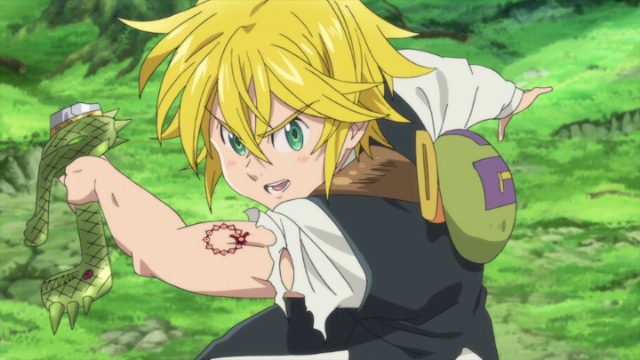
Before the anime, there was the manga. Nakaba Suzuki began serializing The Seven Deadly Sins — Nanatsu no Taizai in Japanese — in Kodansha’s Weekly Shōnen Magazine in October 2012, and it ran until March 2020, eventually filling 41 volumes. By the time it finished, it had over 55 million copies in circulation and had won the 39th Kodansha Manga Award. It was, by any measure, a massive hit.
The premise was deceptively simple. The Seven Deadly Sins were once the most powerful and feared knights in the Kingdom of Liones — protectors of the realm, each carrying the name of a sin: Wrath, Greed, Envy, Sloth, Gluttony, Lust, Pride. Then, ten years before the story begins, they were accused of plotting to overthrow the kingdom. The Holy Knights — the very people they were supposed to stand alongside — turned on them. They scattered. The world moved on, assuming they were either dead or in hiding.
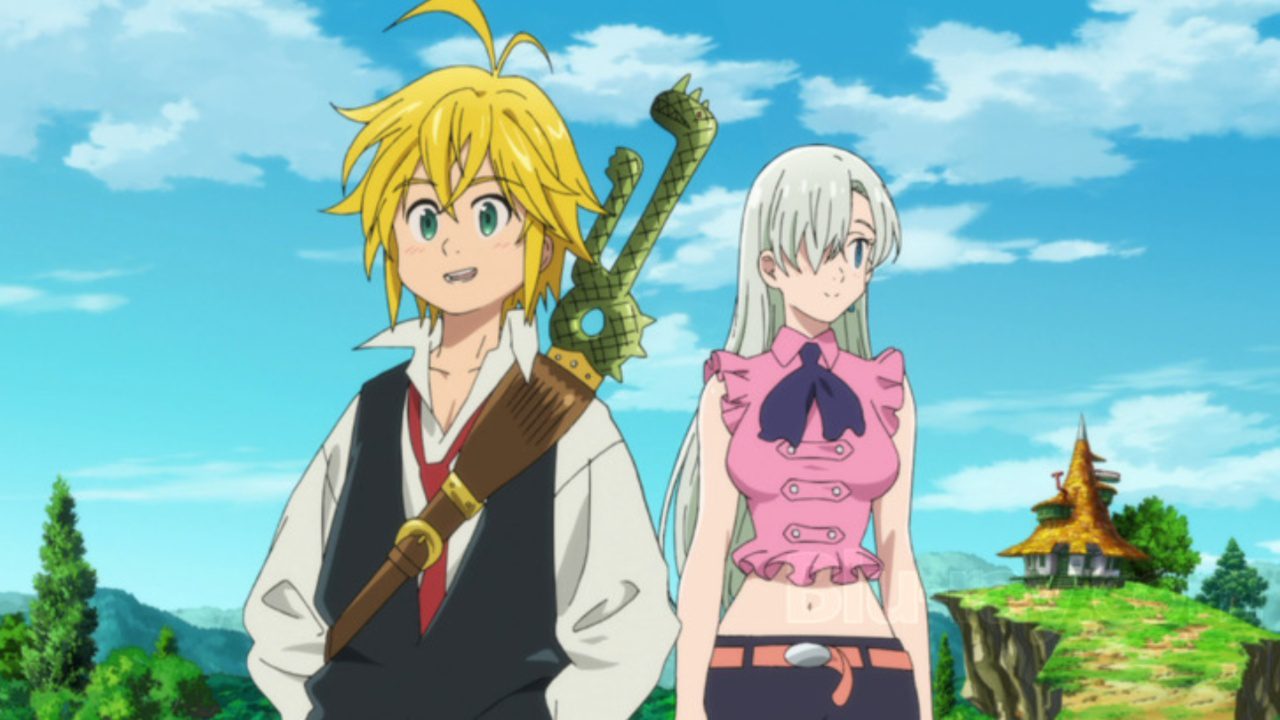
Enter Elizabeth. The third princess of Liones, desperate, barely surviving, wandering into a shabby traveling tavern owned by a young-looking, cheerful, and suspiciously powerful boy named Meliodas. Who, it turns out, is the captain of the Seven Deadly Sins. Who is also, it later turns out, over three thousand years old and carrying a curse that runs deeper than any war.
What Suzuki built from there was something that kept escalating in all the right ways. The Holy Knights arc. The revival of the Ten Commandments — ancient demons of terrifying power. The truth about Meliodas and Elizabeth’s reincarnation cycle. Each revelation opened into something bigger, and the characters carrying the story — the tragic, immortal Ban and his love for Elaine; King’s thousand-year guilt over his friend Helbram; the blazing, heartbreaking pride of Escanor — gave the increasingly cosmic stakes an emotional core that kept readers hooked.
The manga had problems too. The pacing in the later arcs became messy. The power escalation got genuinely absurd. Some fans felt the final act leaned too hard on convenient last-minute saves. But there was no question: Suzuki had built something with real personality, real heart, and a world people wanted to live in.
In 2014, A-1 Pictures got the job of bringing it to life.
The Golden Era: Seasons One and Two
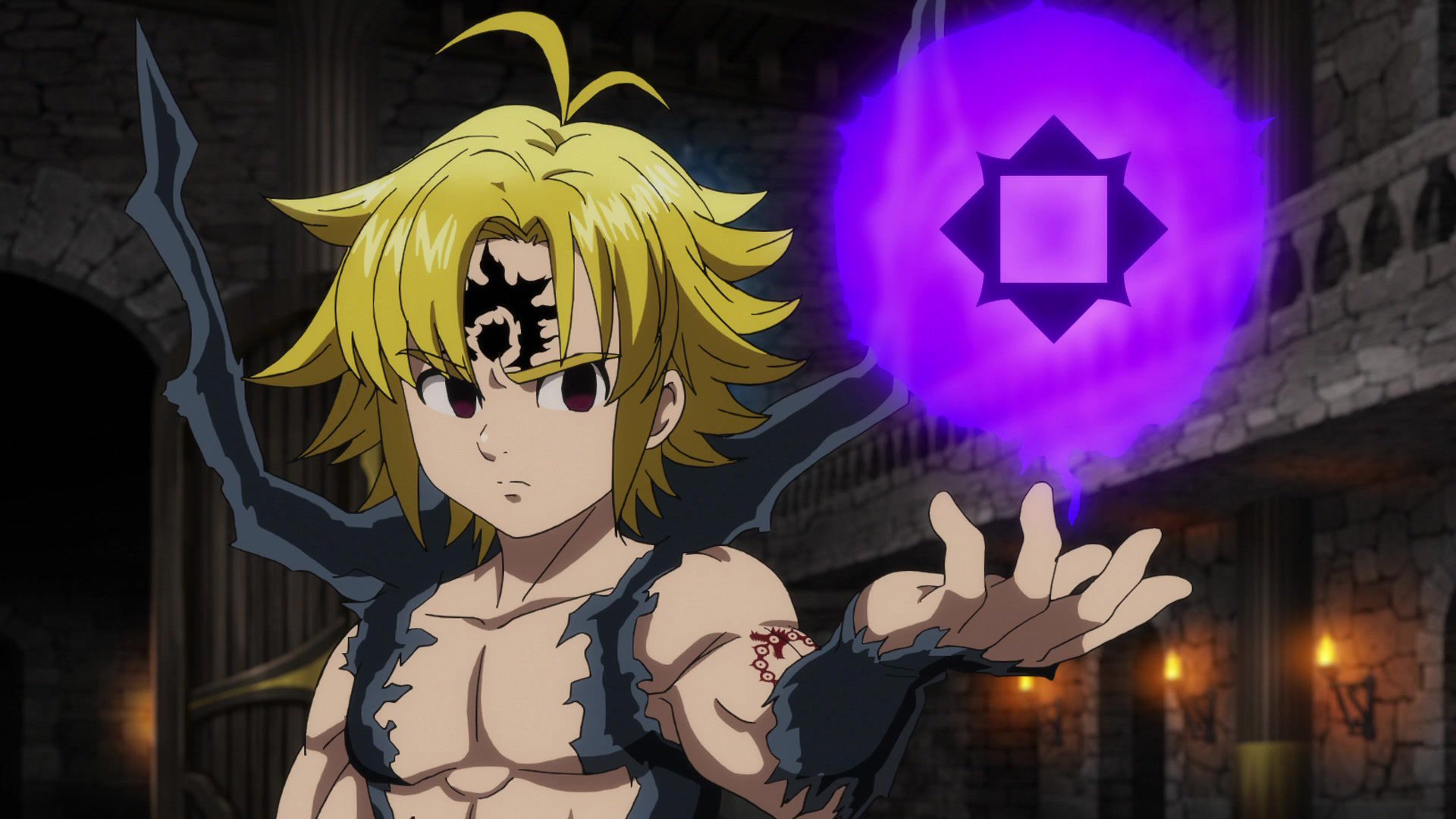
A-1 Pictures was the right studio at the right time. Known for big, visually polished adaptations — Sword Art Online, Blue Exorcist as a co-producer — they understood how to take a popular manga and make it feel cinematic. Director Tensai Okamura and his team built the show’s visual identity with care: fluid action, expressive character animation, a color palette warm and vivid enough to make Britannia feel like somewhere you could actually visit.
Then there was Hiroyuki Sawano’s score. If you want to understand why Season 1 hit as hard as it did, start there. Sawano has a gift for music that sounds like the emotional equivalent of being hit in the chest — sweeping, enormous, impossible to ignore. When Meliodas finally let loose for the first time, or when Ban sprinted through a collapsing dungeon toward someone he loved, Sawano was underneath it all, making sure you felt every second.
The show premiered in Japan in October 2014. Netflix acquired it as only their second-ever exclusive anime pickup — the platform was still in its early years of building an anime library, and The Seven Deadly Sins was a major bet. All 24 episodes dropped simultaneously in English and Japanese on November 1, 2015.
The response was extraordinary. The series became the fourth most binge-watched show in its first 24 hours on Netflix. Overseas audiences who had never engaged with anime found themselves six episodes deep at midnight and completely unable to stop. For a lot of Western viewers, The Seven Deadly Sins was their gateway into the genre — the show that made anime feel accessible, fun, and genuinely gripping all at once. Netflix had found its flagship anime.
Season 3, Revival of the Commandments, arrived in 2018. Still A-1 Pictures. Still Hiroyuki Sawano. The Ten Commandments had been unleashed, the stakes had been raised to apocalyptic levels, and the show was building toward what felt like an inevitable, spectacular conclusion. Fans were invested in a way that only happens when a series has genuinely earned it.
Nobody knew it at the time, but Season 3 was the last time The Seven Deadly Sins would look the way it was supposed to look.
The Collapse: What Actually Happened
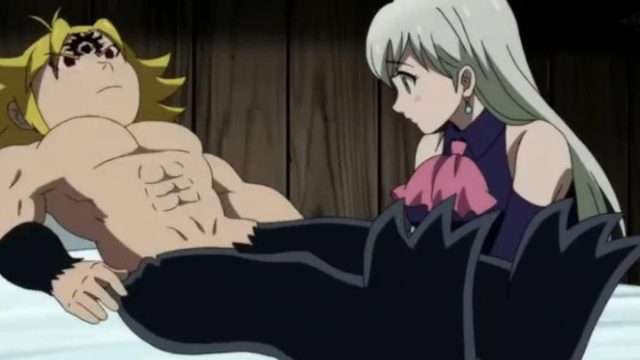
This is where the story turns, and to understand it, you need to know about a movie.
In 2018, A-1 Pictures produced Prisoners of the Sky, a theatrical film for the franchise. It was fun, non-canonical, and by most accounts a decent watch for fans of the series. It was also, at the box office, a disappointment.
The poor performance had cascading consequences. Aniplex — the production company that had been funding the anime, and the parent company of A-1 Pictures — dropped the franchise entirely. When Aniplex walked, it effectively took A-1 with it. The production team found themselves without a studio, without the people who had built the show’s visual language, and with a new season to produce in under a year.
The studio they landed on was Studio Deen.
Studio Deen is a legitimate company with a real history. They’ve done good work on smaller, quieter projects — the original Fruits Basket adaptation, early Rurouni Kenshin. But “smaller, quieter projects” is the key phrase. The Seven Deadly Sins was a high-octane shōnen franchise with demanding fight choreography, large-scale battles, and a fanbase spoiled by two seasons of genuinely impressive animation. Studio Deen, overwhelmed and under-resourced, reportedly outsourced significant portions of the production to other studios. The result was something that, by any reasonable standard, should not have been allowed to air.
Season 4 — Imperial Wrath of the Gods — premiered in October 2019. The reaction was immediate and brutal.
The characters looked wrong. Not subtly off, not “different but acceptable” — wrong. The fluid movement that had made fights exciting was gone, replaced by choppy, stiff sequences that leaned heavily on static frames and speed lines. The dynamic camera work that had given battles their physical weight disappeared. Character models were inconsistent from episode to episode, sometimes from scene to scene.
And then there was the blood. During intense fight sequences, what should have been blood was replaced — on the TV Tokyo broadcast — by bright white light. Characters were impaled, stabbed, and torn apart, and instead of the visceral consequences you’d expect, they bled light. Some scenes had dark smudges painted over mildly violent moments for reasons that were never fully explained. Fans who rushed to the Netflix version hoping for an uncensored experience found the same bizarre choices intact. The white-light blood became a shorthand in online discussions — a symbol of everything that had gone wrong.
But the single moment that crystallized the community’s grief, more than any other, was the fight between Meliodas and Escanor.
In the manga, this is considered one of the best fights in the entire series. Escanor — the warrior blessed by the sun, who becomes the most powerful being alive at high noon — going up against Meliodas in full demonic form. The scale of it, the emotional stakes, the sheer spectacle — Suzuki had built it as a centerpiece moment. Fans had been waiting for years.
Studio Deen animated it as a series of barely-moving stills.
The online reaction was not disappointment. It was rage. Comparison videos spread everywhere — manga panel next to anime screenshot, the gulf impossible to argue with. The words “cautionary tale” started appearing in articles about the franchise. People who had loved the show since 2015 were writing about it in past tense. Some said they simply went to the manga and never came back.
Season 5, Dragon’s Judgement, arrived in 2021 after a COVID-related delay and finished the story. There were individual episodes and sequences that showed genuine effort — moments where you could see someone had cared — but they existed inside a season that never recovered its footing. By the time Meliodas and Elizabeth’s story finally reached its end, a significant portion of the audience had already left.
The Sequels That Couldn’t Fix It
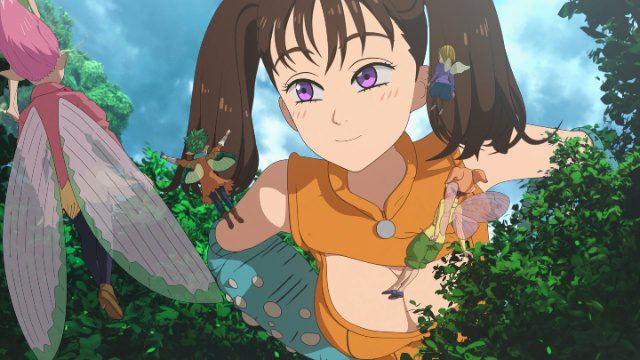
After the main series ended, Netflix commissioned a two-part film called Grudge of Edinburgh, shifting focus to Tristan, the son of Meliodas and Elizabeth, who carries the powers of both the demon and goddess clans and struggles to control them. Part 1 dropped in December 2022, Part 2 in August 2023. It was the fifth different studio to work on the franchise, and their choice for the visual style was full CGI animation.
You can imagine how that went.
The reaction from fans ranged from confused to furious. The CGI wasn’t technically broken — some action sequences were competently rendered — but it bore no resemblance to the hand-drawn aesthetic that had defined the series. Viewers described it as looking like a video game cutscene. People who had watched the original seasons with genuine love wrote reviews saying the animation was “a knife to the heart of the franchise.” The story, ironically, was fine — Tristan as a protagonist has real emotional potential — but the visual presentation made it nearly impossible to recommend to anyone not already deeply invested.
Then, in October 2023, Four Knights of the Apocalypse arrived. The full sequel series, set sixteen years after the Holy War’s end, following a new protagonist named Percival on a journey prophesied to end the world. New studio — Telecom Animation Film, under TMS Entertainment.
And for the first time in years, the animation actually looked decent.
Not stunning. Not A-1 Pictures Season 1 levels. But competent, consistent, and hand-drawn. The series currently sits at a 7.1 on IMDB, and longtime fans came back online to say it felt, in places, like the early seasons again. The villain, Arthur Pendragon — now fully realized as a genuine antagonist — was widely praised. A second season aired in late 2024. The franchise is still alive.
But Percival proved divisive. He’s naïve to a degree that some found endearing and others found exhausting — a cheerful, wide-eyed boy where fans had grown up with Meliodas’s sardonic cool and Ban’s roguish swagger. Four Knights is a capable sequel, but it hasn’t recaptured the lightning-in-a-bottle feeling of the early years. Whether it ever will remains an open question.
What Was Lost, and What Remains
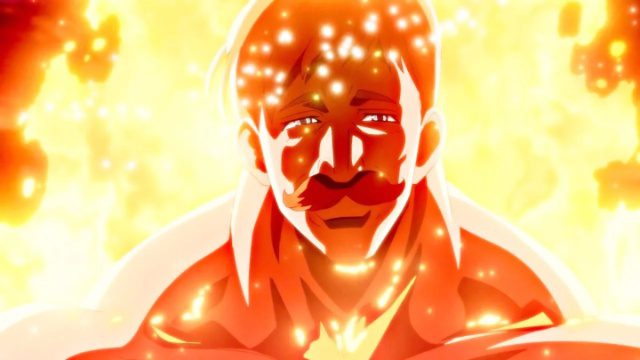
Here’s the honest truth about The Seven Deadly Sins: the story Nakaba Suzuki told was worth telling. The world he built — the demons and goddesses, the sins and their curses, the reincarnating love story between Meliodas and Elizabeth stretching across thousands of years — has a genuine mythology to it. The characters, at their best, are genuinely moving. Ban and Elaine. King and Diane. Escanor, who literally burns himself alive because love asks it of him.
What the anime lost was the ability to do any of it justice. The decision-making that led from a first season that was genuinely special to a fourth season that was genuinely embarrassing was a cascade of industry failures — a bad box office result, a parent company walking away, a replacement studio handed something it wasn’t equipped for, a production timeline that didn’t allow for the work to be done properly. Nobody sat down and decided to make the show worse. But the structural conditions created a situation where making it better was nearly impossible, and the people in charge let it happen anyway.
That’s what makes it genuinely sad, in a way that goes beyond normal disappointment. The Seven Deadly Sins had everything it needed to be remembered as one of the great shōnen anime of the 2010s. The source material was there. The early execution was there. The fanbase was there — enormous, enthusiastic, and willing to follow the series wherever it wanted to go. There was a version of this story where the anime concluded on the same level it started, where the Escanor vs. Meliodas fight lived up to every expectation, where the finale felt like the ending a great show deserved.
That version doesn’t exist. Instead, it became a warning. A name brought up in online discussions about what happens when the business side of anime overrides the craft.
The first two seasons are still worth watching. The manga is still worth reading. Four Knights of the Apocalypse is still worth giving a chance. The world Nakaba Suzuki built hasn’t gone anywhere, and it still has real magic in it.
But for the people who were there in 2015, when The Seven Deadly Sins was new and exciting and the most fun thing on Netflix — when the Boar Hat rolled across Britannia and Sawano’s music swelled and the whole show felt like a promise about to be kept — that feeling is gone. And it was taken away not by the story, but by a series of spreadsheet decisions and production shortcuts that the fans who loved it most never had any say in.
The show deserved better. So did they.
Hello, I am a huge anime fan with a decent experience in writing articles regarding the anime industry.