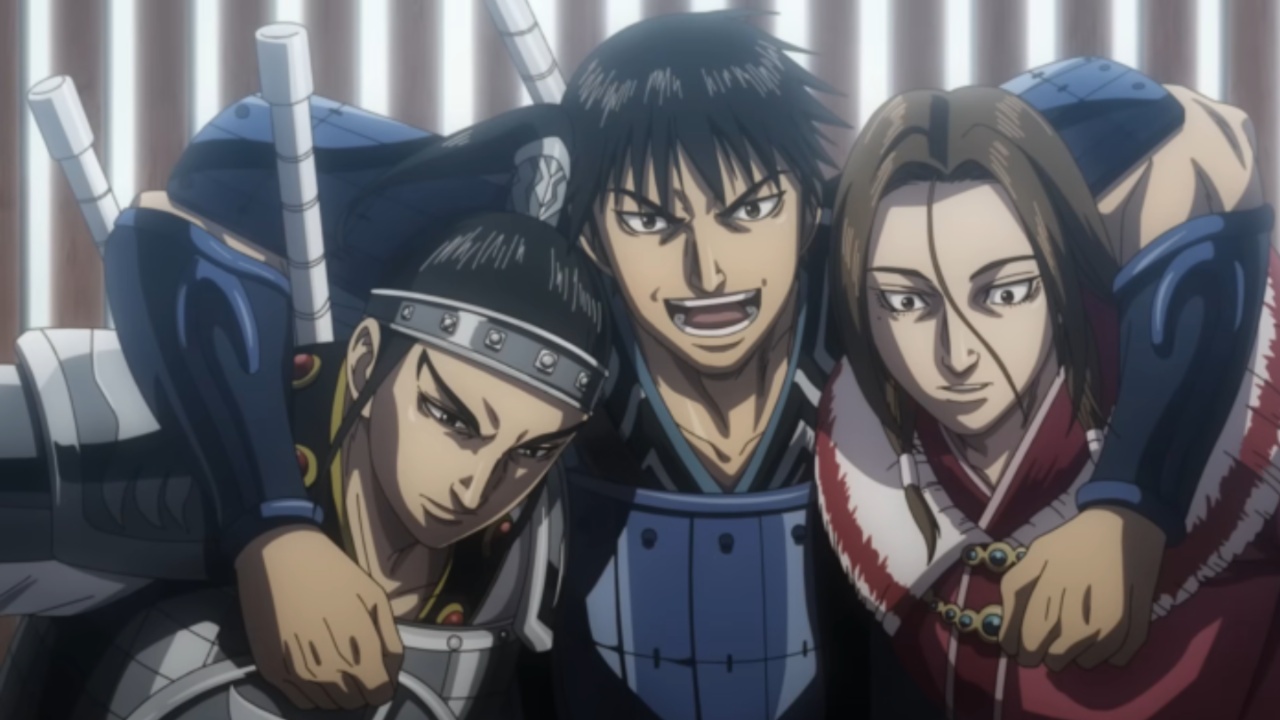
In the shadowed annals of ancient China, where the clash of halberds echoes like thunder across fractured kingdoms, Kingdom stands as a colossus among anime adaptations. Based on Yasuhisa Hara’s sprawling manga serialized in Young Jump since 2006, this series transforms the Warring States period (475–221 BCE) into a visceral symphony of strategy, betrayal, and unyielding human spirit. At its heart is Li Xin (Shin in the anime), a scrappy orphan with dreams as vast as the Yellow River, who rises from the mud of slavery to challenge the heavens themselves. As of December 2025, with Season 6 thundering through its final episodes—Episode 11 having aired just days ago on NHK General—the series isn’t just surviving; it’s conquering. Premiering its sixth installment on October 4, 2025, Kingdom proves that tales of unification aren’t relics of history but living flames that demand our attention. But does it hold its edge after 13 years? Let’s march through the battlefields of plot, animation, and fan fervor to find out.
The Plot: From Orphan’s Oath to Empire’s Dawn
Kingdom isn’t a mere retelling of history; it’s a fictionalized fever dream of the Qin dynasty’s relentless push toward unification, blending real figures like King Ei Sei (Ying Zheng, the future Qin Shi Huang) with Hara’s inventive grit. The narrative unfolds across the seven warring states—Qin, Zhao, Wei, Chu, Yan, Han, and Qi—where alliances shatter like brittle spears and every victory carves deeper scars. Our lens is Shin, voiced with raw fire by Masakazu Morita, whose journey from wide-eyed boy to legendary general mirrors Qin’s ascent from underdog to hegemon.
The series kicks off in 245 BCE, the second year of Ei’s reign, amid a world where war orphans like Shin and his blood brother Hyou scrape by in Qin’s capital of Xianyang. Their pact to become the “350,000-Man Generals of the Heavens” ignites the fuse, propelling Shin into a maelstrom of rebellion, invasion, and court intrigue. What follows is a mosaic of arcs that escalate from skirmishes to cataclysmic clashes, each layering political chess with brutal melee.
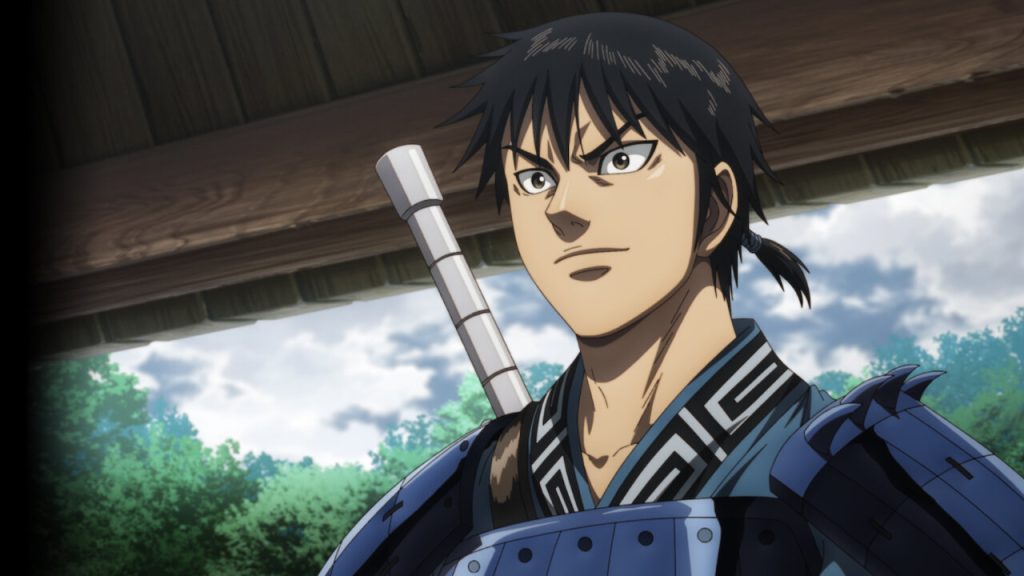
Season 1 (2012, 38 episodes) launches with the Seikyou Rebellion, a palace coup that thrusts Shin into Ei Sei’s service as a reluctant bodyguard. Here, we meet the enigmatic strategist Ten (Ryo Fui’s retainer) and the stoic general Ou Ki, whose mentorship forges Shin’s blade. The arc crescendos in a desperate stand against traitorous forces, blending Shin’s street-brawling instincts with tactical genius. It ends on a hook: Qin’s eyes turn northward to Zhao, the “White-Haired Demon” Riboku’s domain.
Season 2 (2013–2014, 39 episodes) dives into the Battle of Bayou, Qin’s audacious invasion of Zhao territory. Shin enlists in the Hi Shin Unit, a ragtag band of misfits that evolves into a symbol of unbreakable will. Amidst Riboku’s cunning traps and the Zhao’s unyielding defenses, alliances form—Shin crosses paths with the prodigy Mou Ten and the fierce Kyou Kai—while Ei’s reforms stir unrest back home. The season’s emotional gut-punch comes in losses that redefine loyalty, setting the stage for deeper explorations of generalship.
By Season 3 (2016, 26 episodes), the canvas widens to the Coalition Invasion Arc, where six states unite against Qin in a bid to crush the upstart. Shin’s unit becomes the anvil in grueling defenses at Kankoku Pass, showcasing Hara’s mastery of multi-front warfare. Riboku’s shadow looms larger, his psychological ploys clashing with Ou Ki’s thunderous charges. This season introduces the “Bushin Festival,” a rare breather of festival revelry amid gore, humanizing the warriors.
Season 4 (2022, 26 episodes) reignites the Qin-Zhao feud with the Battle of Gyou, a frozen hellscape where avalanches and ambushes test resolve. Shin grapples with command’s weight, leading daring raids that echo his founder’s fire. Ei’s unification edict gains momentum, but internal snakes like the scheming Ryo Fui threaten from within. The arc peaks in a symphony of sacrifices, elevating side characters like the stoic Duke Hyou to mythic status.
Seasons 5 (2024, 26 episodes) and 6 (2025, ongoing) plunge into the heart of the Zhao conquest, adapting the manga’s “Western Zhao Invasion” and beyond. Season 5 builds the siege of Gian, where Qin’s generals—Wang Ben, Mou Gou, and the rising stars—face Riboku’s labyrinthine strategies. Shin’s growth accelerates; no longer a hothead, he wields intuition like a glaive. Tensions simmer with Zhao’s internal fractures, including the tragic figure of Hou Ken, the Bushin reborn in shadow.
As Season 6 unfolds, the war escalates to fever pitch: Qin’s separate task forces, led by Ma Kyo and Mou Ten’s Rakka Squad, strike at Kei Sha’s core. Recent episodes pulse with chaos—Shin’s detachment assaults the enemy HQ, only for Li Mu’s “killer detachment” to unleash havoc. The stakes? Total annihilation or breakthrough to the Zhao capital. Without spoiling the manga’s twists, these seasons fulfill the promise of escalation: battles aren’t just clashes but crucibles, where a single feint can topple dynasties. The plot’s genius lies in its dual tracks—Shin’s ground-level fury and Ei’s throne-room gambits—mirroring the era’s blend of might and mind.
Animation: From Stilted Shadows to Sweeping Legions
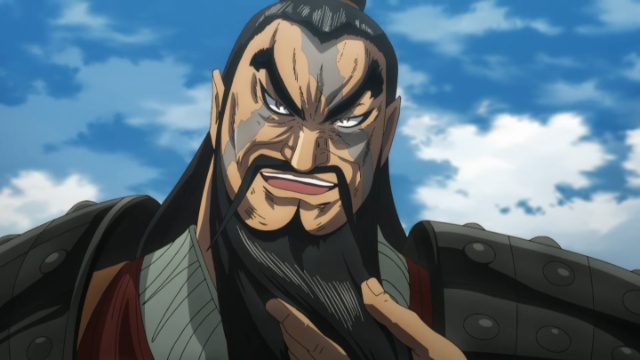
If Kingdom‘s story is a raging river, its animation has been a rocky ford—treacherous at first, but smoothed to a torrent by later seasons. Produced by Studio Pierrot (Seasons 1–2) and then Pierrot with Signal.MD (Seasons 3+), the early visuals drew fire for their jarring CGI horses and stiff character models, evoking a budget Dynasty Warriors cutscene more than fluid anime. Season 1’s 2012 debut, directed by Takahiko Kamiguchi, prioritized scope over polish; vast armies clash in wide shots that impress conceptually but falter in motion, with faces warping like wax under heat. Fight scenes, meant to evoke bronze-age frenzy, often feel like slideshows, alienating newcomers.
Yet, this is Kingdom‘s redemption arc. Season 2 refined the formula slightly, but the quantum leap came in Season 3 under Kenichi Imaizumi’s direction. Ditching heavy CGI for 2D fluidity, battles gained dynamism—Kankoku Pass’s defenses pulse with kinetic energy, arrows whistling like vengeful spirits. Mou Ten’s tactical overlays, once clunky, now integrate seamlessly, heightening the chess-like tension.
Seasons 4 and 5, animated by Pierrot and Signpost, hit stride: Gyou’s snow-swept fields render with painterly detail, blood spraying in arcs that honor the manga’s gore without gratuity. Shin’s swordplay evolves from arcade hacks to balletic fury, each swing weighted by momentum. Season 6 elevates further—no CGI crutches here, just lush 2D vistas of Zhao’s plains, where dust clouds and phalanxes move like living tapestries. Imaizumi’s touch shines in Episode 11’s melee, a whirlwind of intercepts and counters that rivals Vinland Saga‘s grit. Quality? Uneven start, unassailable peak. It maintains high standards post-Season 3, proving adaptation can outpace its origins.
Fan Devotion: Expectations Shattered, Demand Unquenched
Do fans love Kingdom? With a fervor that could storm the gates of Xianyang. On MyAnimeList, the series boasts a 9.04 overall score, ranking #8 all-time as of November 2025, while Season 6 alone commands a 9.0+ from over 3,500 voters—topping Fall 2025 charts. Reddit’s r/anime and r/Kingdom brim with threads dissecting arcs, from “Why Season 1’s ugliness can’t kill the story” to “S6 is peak fiction—Riboku’s mind games are chef’s kiss.” Survivorship bias plays a role; early dropouts cite animation woes, but those who endure hail it as “the seinen war epic we deserve,” blending Berserk‘s brutality with Legend of the Galactic Heroes‘ strategy.
Expectations? Exceeded at every turn. Manga purists praise fidelity—Hara consults on adaptations—while anime-first viewers find unexpected depth in themes of found family and ambition’s cost. “It’s not just battles; it’s about men breaking to build something eternal,” one X user raved amid Season 6 hype. Demand surges: Crunchyroll streams shatter records, with English dubs fueling global legions. X buzz peaks weekly—previews for Episode 12 draw thousands of likes, fans theorizing Li Mu’s next feint. Even skeptics convert; as one Redditor noted, “Dropped S1, binged S6—now it’s my GOAT.”
Yet, it’s not flawless. Pacing drags in political detours, and female characters like Kyou Kai shine but sparingly. Still, Kingdom fulfills its oath: a saga that doesn’t just entertain but inspires, demanding you root for the underdogs even as they paint fields red.
As Episode 12 looms on December 21, Kingdom marches on, a testament to endurance. In a sea of isekai fluff, it reminds us why anime endures: to immortalize the roar of history’s unsung. Whether you’re a veteran general or fresh recruit, enlist now— the unification awaits, and it’s glorious.
Hello, I am a huge anime fan with a decent experience in writing articles regarding the anime industry.